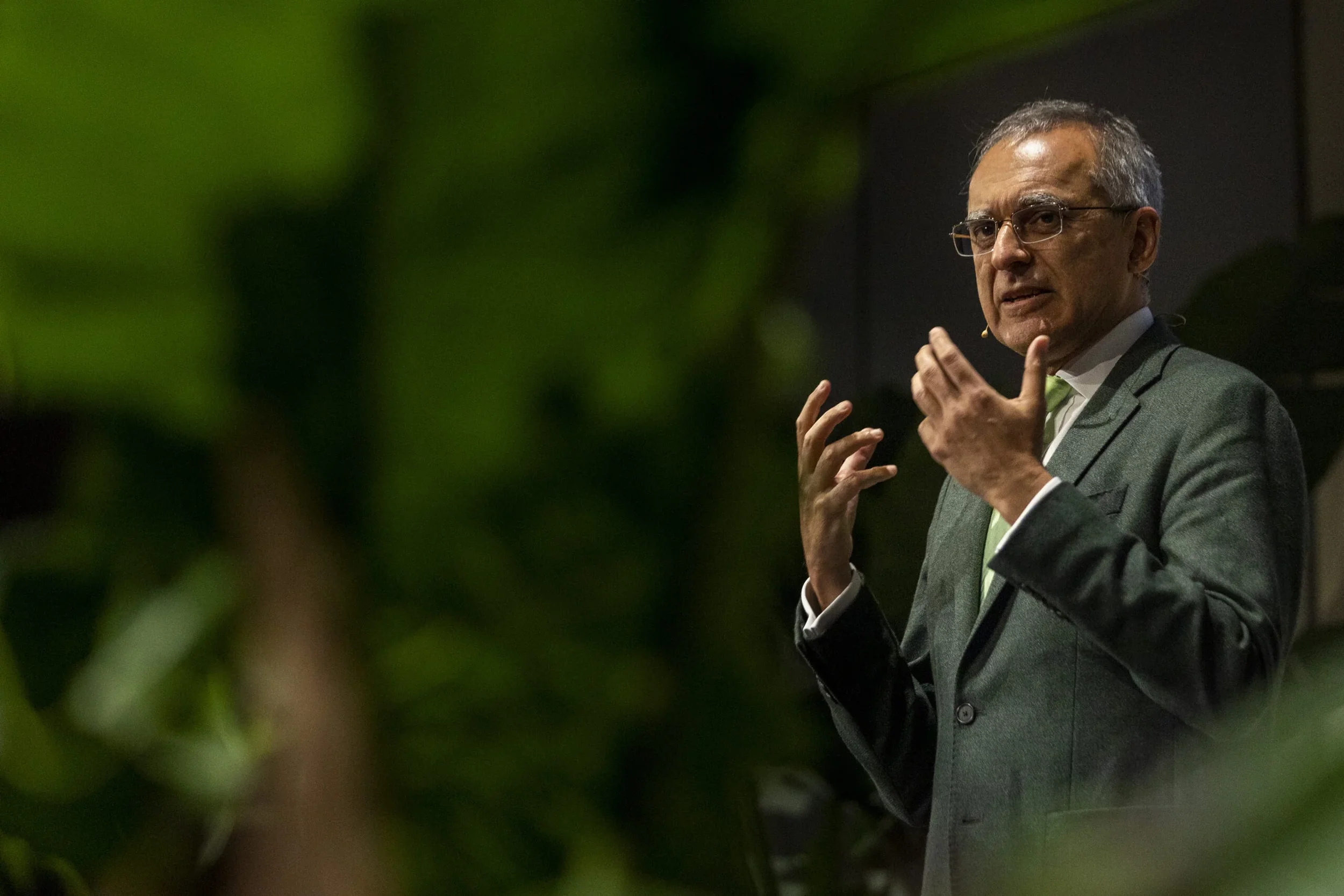
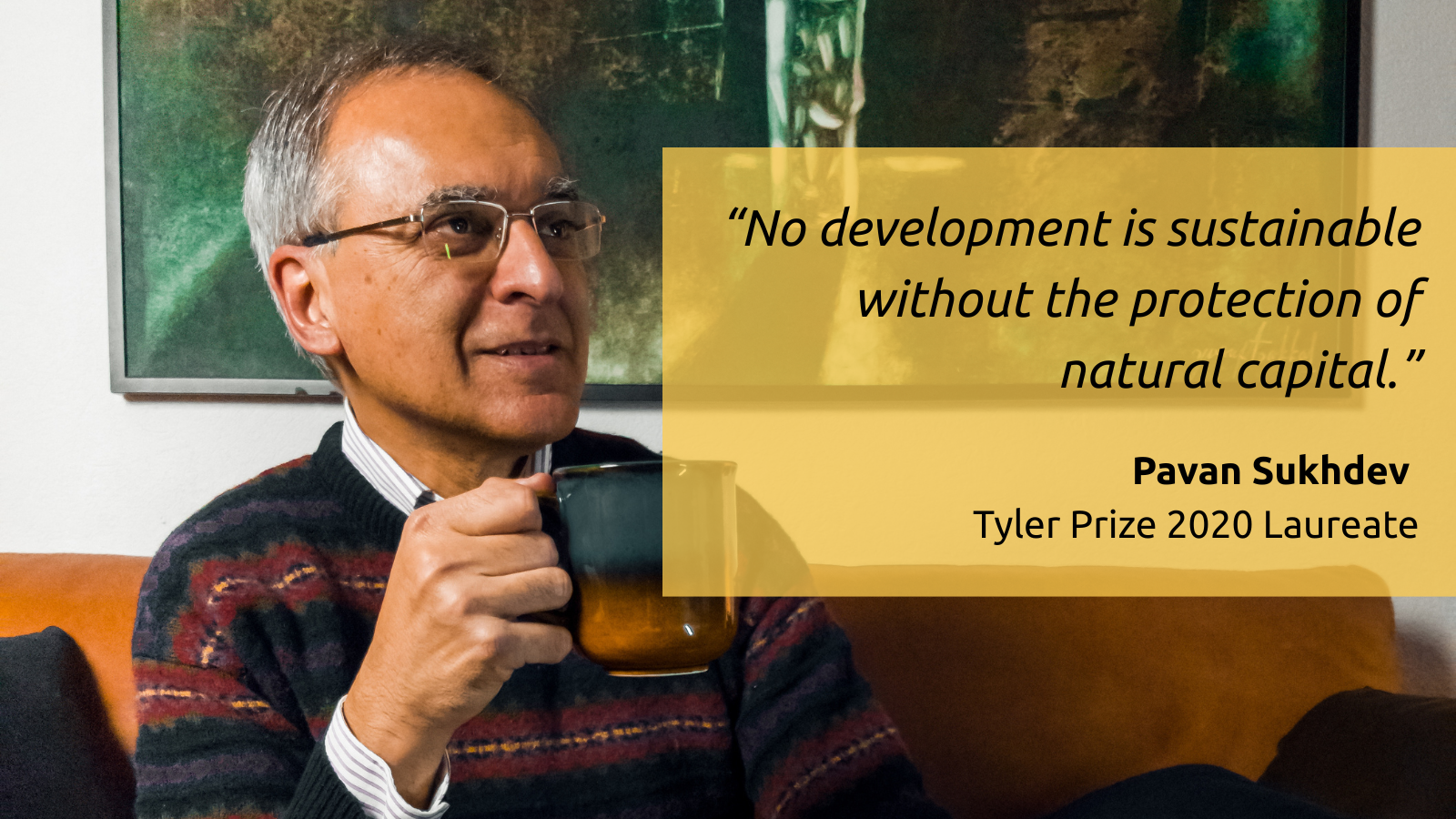
Pavan Sukhdev
Tyler Prize Laureate 2020
Rewriting the Rules of Economics to Include Nature
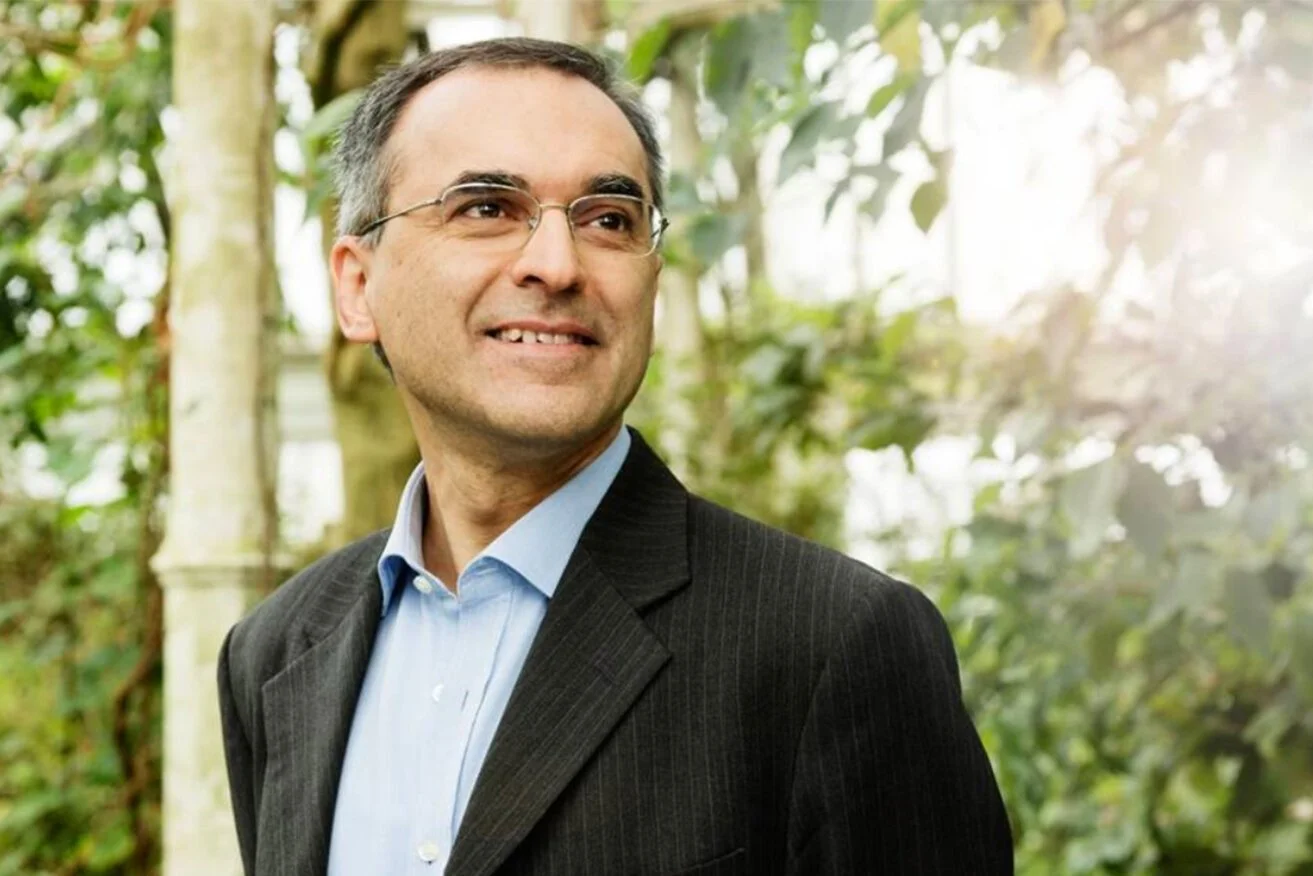
Quick Facts
Born: March 30, 1960, Delhi, India
Affiliation at the time of the award: GIST Advisory, World Wildlife Fund
Environmental achievement: Recognized for extraordinary improvements in our understanding and application of the economics of ecosystems and biodiversity; bringing together the worlds of finance and economics with that of conservation.
Get to know Pavan Sukhdev
How can we measure the true value of nature — and build economies that reflect it?
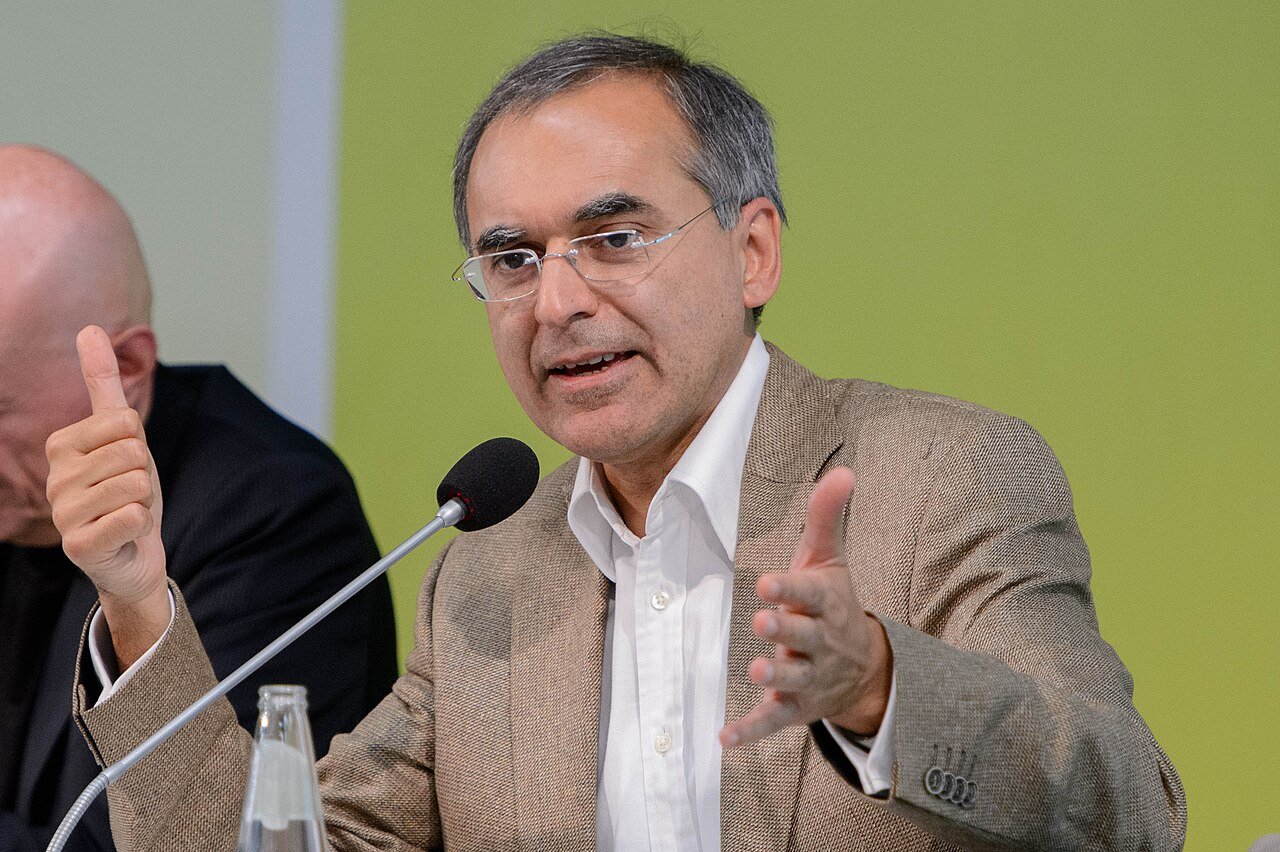
This question has guided Pavan Sukhdev’s groundbreaking work at the intersection of finance, conservation, and sustainable development. An international banker turned environmental economist, Sukhdev helped transform how global leaders see — and value — the natural systems we all rely on.
He led the influential Economics of Ecosystems and Biodiversity (TEEB) initiative for the G8+5, a global study that revealed the hidden economic costs of biodiversity loss and ecosystem degradation. The TEEB reports made it clear: nature’s services, once seen as "free" and unlimited, carry immense — and measurable — value.

Appointed by the United Nations Environment Programme (UNEP), Sukhdev went on to lead the Green Economy Initiative, showing how environmental sustainability can be a powerful engine for growth, employment, and equity — not a barrier.
Through his consultancy, GIST Advisory, Sukhdev brings his research to life, helping governments and corporations implement sustainability strategies that move “beyond GDP.” His vision is a future where economic decisions protect people, the planet, and prosperity.
Celebrating an Economist Who Reimagined Growth
Due to the global COVID-19 pandemic, the 2020 Tyler Prize was celebrated in a special virtual format. Pavan Sukhdev and co-Laureate Gretchen Daily joined the public for a live Q&A titled: “The Value of Nature: Unwinding Economics’ Most Dismal Failure.”
This unique conversation explored how natural capital and ecosystem services are reshaping global thinking — and why these ideas matter more than ever in times of crisis.